Dedicated DevOps Engineer or Developer-Led Ops? How to Decide
by
-
7 minutes read
-
August 20, 2026
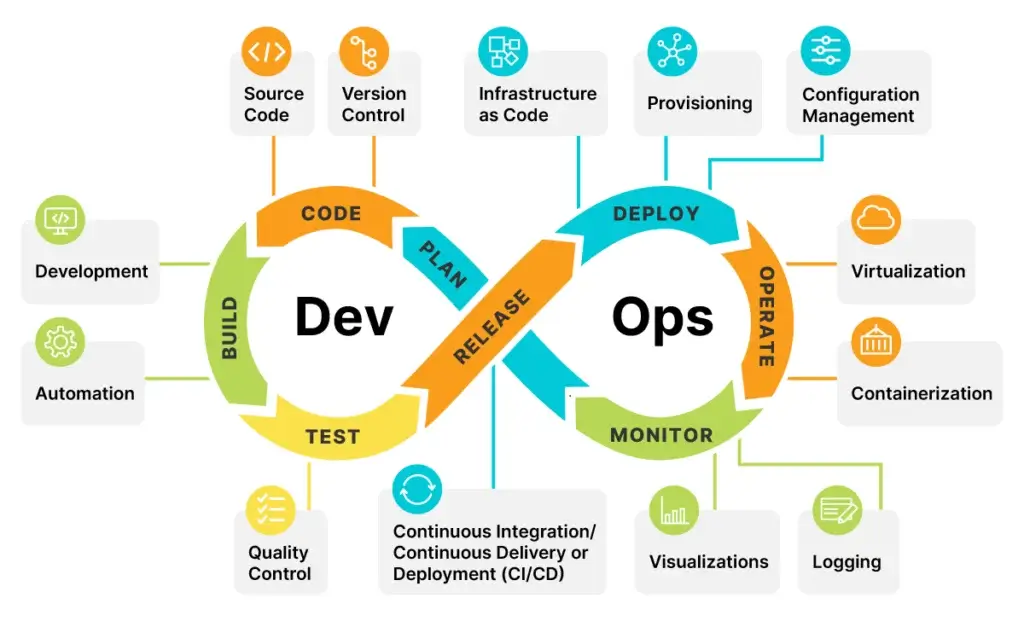
Every team starts with developers owning deployments
Early on, one or two engineers push to production themselves, spin up a cloud account by hand, and fix whatever breaks. It works because the whole system fits in their heads and nothing runs at a scale where a mistake is expensive.
The question is not whether developer-led ops was ever wrong. It is whether it still matches where the product is today. Most teams keep the same ad hoc setup long after the infrastructure has outgrown it, and that gap is where slow releases and 2 a.m. incidents start.
The question is not whether developer-led ops was ever wrong. It is whether it still matches where the product is today. Most teams keep the same ad hoc setup long after the infrastructure has outgrown it, and that gap is where slow releases and 2 a.m. incidents start.
Why the same model stops working
Developer-led ops has a structural blind spot: the person writing features is also the person who has to remember every manual deployment step, every environment quirk, and every workaround from the last outage. That works while one person carries it all in their head. It stops working the moment a second cloud account, a second environment, or a second engineer enters the picture, because now the knowledge has to live somewhere other than one person’s memory.
Nothing about the underlying infrastructure changes overnight. It just keeps growing — more services, more environments, more dependencies — while the process for running it safely stays the same informal habit it was on day one.
Nothing about the underlying infrastructure changes overnight. It just keeps growing — more services, more environments, more dependencies — while the process for running it safely stays the same informal habit it was on day one.
Six signals it is time for a dedicated DevOps engineer
None of these alone is decisive. Two or three together are a strong signal:
- Deployments still need a person, not a pipeline.
If shipping to production means one specific engineer runs a sequence of manual commands from memory, the release process is a single point of failure, not a repeatable system. - Incidents get handled by whoever is around.
Without a defined on-call owner, outages get triaged by availability, not by who is best equipped to fix them — and recovery time depends on luck. - Cloud costs are climbing faster than usage.
Unowned infrastructure accumulates unused instances, oversized databases, and forgotten environments. No one notices until the bill does. - Staging and production have quietly drifted apart.
Configuration and infrastructure changes made by hand in a hurry rarely get mirrored everywhere, so bugs only appear once real traffic hits production. - An enterprise deal or compliance review is on the table.
SOC 2, uptime SLAs, and audit-log requirements all assume infrastructure is defined, reviewed, and reproducible — not configured by hand in a console. - No one on the team is confident touching the infrastructure.
When Kubernetes, Terraform, or cloud IAM changes are avoided because “only Sam knows how that’s wired,” the team is one departure away from an outage no one can fix quickly.
What a dedicated DevOps function actually changes
Hiring for DevOps is not about adding someone to babysit deployments. A good DevOps or platform function turns infrastructure into code that is reviewed like any other change, builds CI/CD pipelines that make releases boring instead of stressful, and puts observability and rollback in place before an incident, not during one. It gives developers a fast, safe path to ship instead of a manual checklist, and it gives the team a cost and reliability owner who does not depend on who happens to remember how something was configured.
It does not replace developers writing infrastructure needs into their features. It adds the cross-environment, cross-service ownership that is structurally hard for feature engineers to hold onto while also shipping product work.
It does not replace developers writing infrastructure needs into their features. It adds the cross-environment, cross-service ownership that is structurally hard for feature engineers to hold onto while also shipping product work.
You do not have to choose between hiring locally and doing nothing
Standing up an in-house platform team takes time: writing the role, hiring for a skill set that is genuinely scarce, and ramping someone up on infrastructure they did not build. A dedicated DevOps engineer — sourced the same way teams source dedicated developers or QA — can start automating deployments and stabilizing environments in weeks instead of months, working inside your existing sprint cycle rather than as an outside consultant who disappears after the audit.
The same evaluation questions that apply to hiring any dedicated engineering resource apply here: how changes to infrastructure get reviewed, how incidents get documented, and how the roadmap for reliability work gets prioritized alongside feature work rather than pushed to whenever there is time left over.
The same evaluation questions that apply to hiring any dedicated engineering resource apply here: how changes to infrastructure get reviewed, how incidents get documented, and how the roadmap for reliability work gets prioritized alongside feature work rather than pushed to whenever there is time left over.
How Innvente can help
Innvente’s DevOps and platform engineering team builds CI/CD pipelines, infrastructure as code, and observability for growing products, and can plug in as a dedicated DevOps resource alongside your existing engineers. If you are not sure whether your product needs a dedicated DevOps function yet, or where the infrastructure risk actually is, start with a free software project audit — we will show you where deployments and infrastructure are fragile before you commit to a hire.
Quick checklist: is it time?
- Production deployments still depend on one person’s manual steps.
- Incidents get triaged by who is available, not a defined owner.
- Cloud spend is rising faster than actual usage.
- Staging and production configurations have drifted apart.
- An enterprise deal or compliance review needs reproducible infrastructure.
- No one on the team is confident changing the cloud setup.
Share on :