How to Scope an MVP
by
-
7 minutes read
-
June 26, 2026
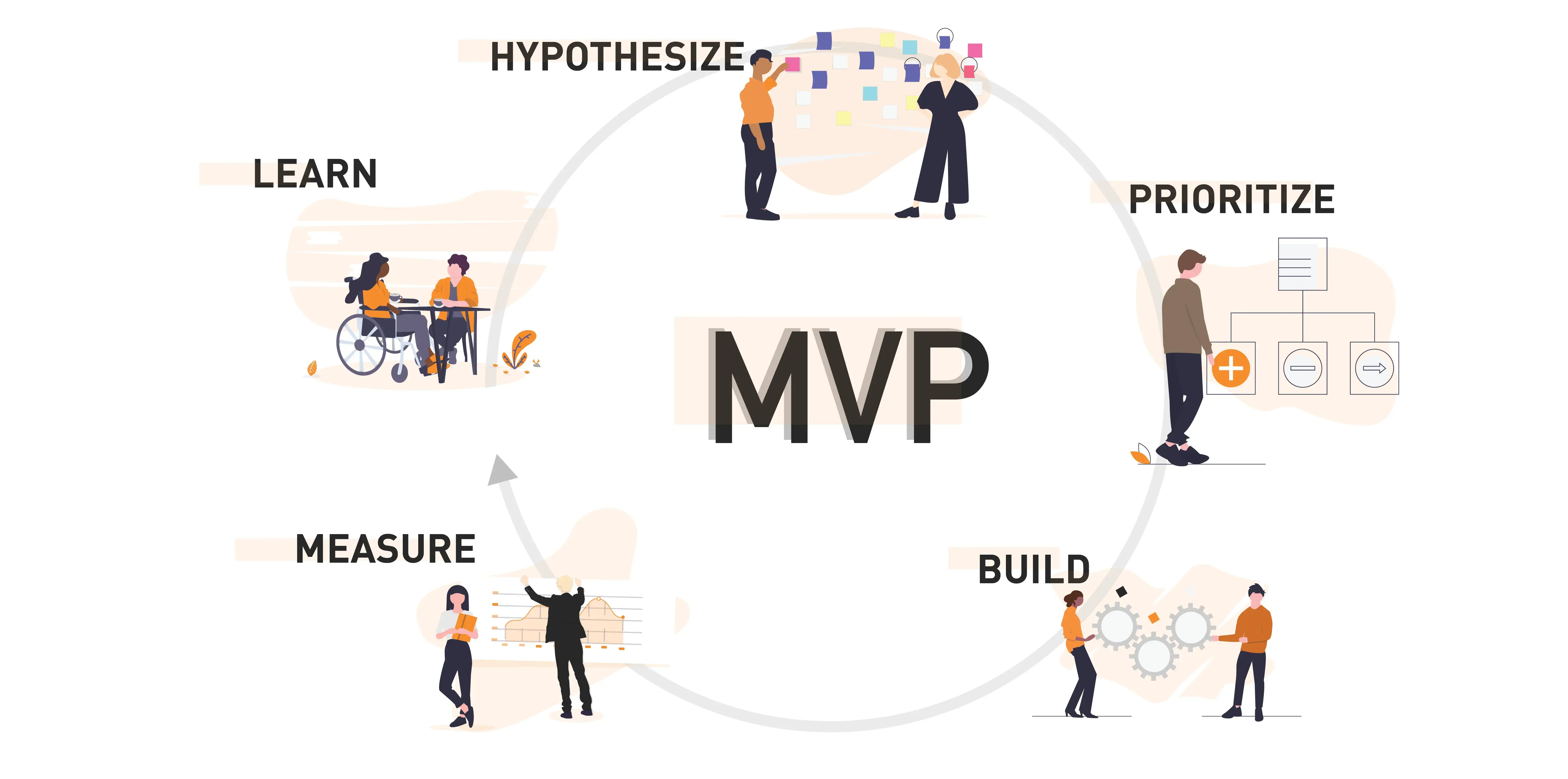
The MVP should test the riskiest assumption
A minimum viable product is not a cheaper version of the final product. It is the smallest useful release that helps you learn whether a real customer problem, workflow, or buying decision exists. When teams forget that, the MVP turns into a long feature list with a shorter deadline.
The best MVP scope starts with the riskiest assumption. If users do not need the workflow, no amount of polish will fix the product. If the workflow is valuable but technically hard, the MVP should prove the hard part early. If the market is unclear, the MVP should help you learn whether buyers care enough to act.
The best MVP scope starts with the riskiest assumption. If users do not need the workflow, no amount of polish will fix the product. If the workflow is valuable but technically hard, the MVP should prove the hard part early. If the market is unclear, the MVP should help you learn whether buyers care enough to act.
Define the decision the MVP must unlock
Before listing features, write the decision the MVP should help you make. Examples:
- Will users complete this workflow without manual help?
- Will customers pay for this outcome?
- Can this AI feature produce trusted results in the real workflow?
- Can the integration support the data volume we expect?
- Can the team ship this product safely with the available budget?
Use the three-layer scope
A practical MVP scope has three layers:
- Core workflow
The minimum set of screens, data, and actions needed for the user to complete the main job. - Trust layer
The quality, security, permissions, reliability, and support details needed for users to trust the workflow enough to try it. - Learning layer
Analytics, feedback loops, logs, and operational visibility that tell the team what happened after launch.
What to cut first
Cut secondary roles, advanced settings, custom dashboards, full admin tooling, complex personalization, and edge-case automation unless they are central to the assumption being tested. Manual operations behind the scenes can be acceptable early if they help you validate the customer experience faster.
Do not cut the parts that protect trust: authentication, permissions, data correctness, basic error handling, and enough QA to avoid misleading feedback.
Do not cut the parts that protect trust: authentication, permissions, data correctness, basic error handling, and enough QA to avoid misleading feedback.
Plan the next two releases before building the first
MVP scope should include a path forward. Define what you will do if the MVP performs well, performs poorly, or reveals a different user need. That helps prevent the first release from becoming a dead end.
A healthy roadmap might look like this: release the core workflow, observe behavior, improve friction points, then add automation, integrations, or scale features once the workflow is proven.
A healthy roadmap might look like this: release the core workflow, observe behavior, improve friction points, then add automation, integrations, or scale features once the workflow is proven.
How Innvente can help
Innvente helps founders and product teams define MVP scope, design the technical path, build the first reliable version, and use early data to decide what should happen next.
Read more about how we work, explore our web product development, or book a software project audit.
Read more about how we work, explore our web product development, or book a software project audit.
Bottom line
A good MVP is not the smallest thing you can ship. It is the smallest thing that can teach you the truth without damaging user trust.
Share on :